Part 1 of 5 · The SLA Illusion
Green SLAs. Angry users.
I’ve watched a CEO and a CIO stand in front of the whole company and proudly announce that IT support had met all of its SLAs.
Then the questions started. Dozens of people, each with a story about a request that sat for days.
Both sides were telling the truth. That’s the problem.
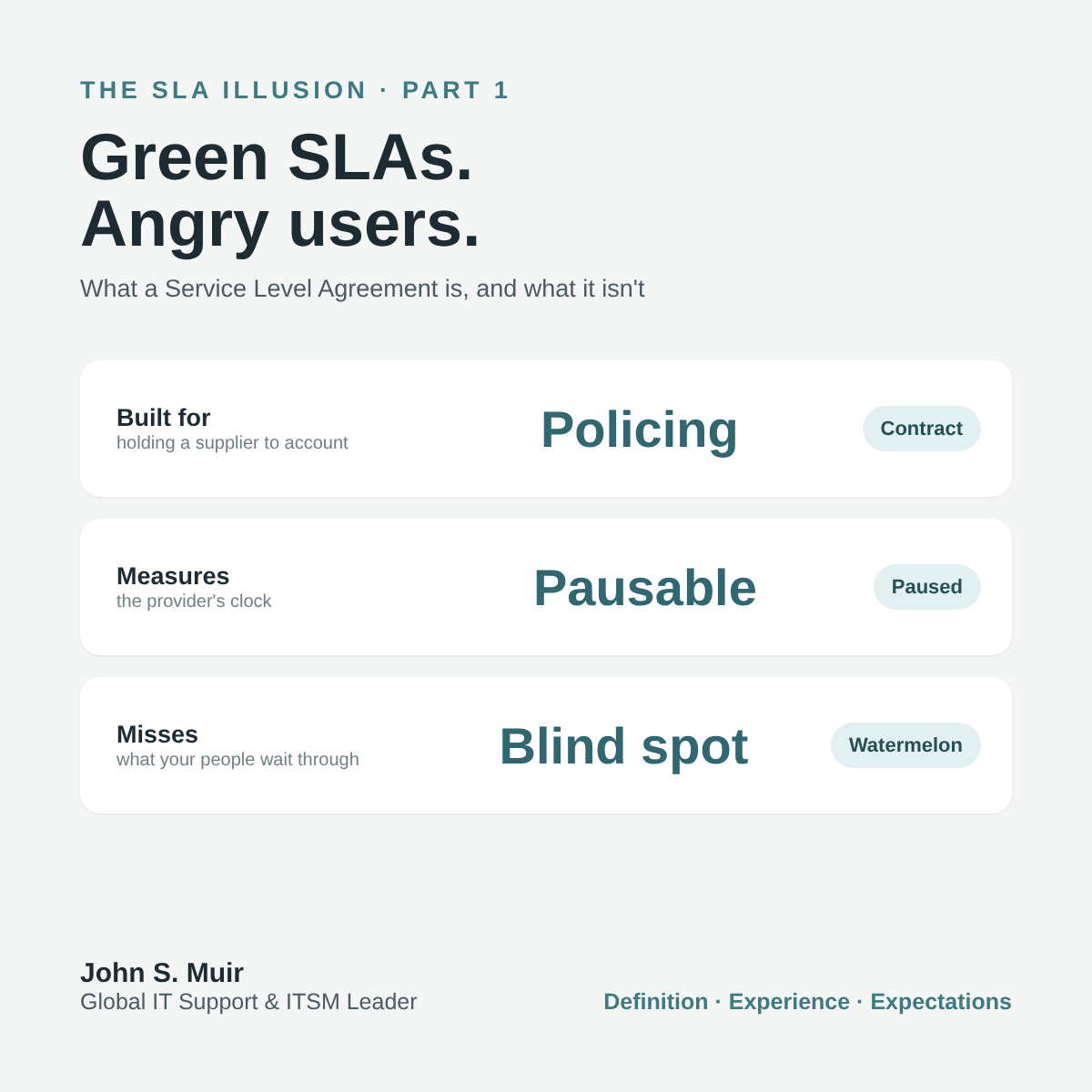
A Service Level Agreement is a documented agreement between a service provider and its customer: what will be delivered, how it will be measured, and what happens when it isn’t. It’s a contract tool, and it’s good at one job: holding a supplier, or an internal group, to clearly stated expectations with penalties attached.
It isn’t a measure of what your people experience. The SLA clock belongs to the provider, and it stops and starts under rules the provider manages. Your employees’ clock never stops.
I’ve built SLA and KPI frameworks and governed managed service providers under SLA-tied contracts. Green dashboards over red experiences happen often enough that the industry has a name for them: the watermelon effect.
This week, Monday through Friday:
- What an SLA actually is (today)
- The 24-hour SLA that took 3 days
- Why missing an SLA takes real effort
- Asking the business the right question
- Leave SLAs to the lawyers
Next in the series: the 24-hour SLA that took 3 days.
Have you ever heard “SLAs were met” and known it wasn’t true for you?
#ITSM #SLA #ServiceDesk #CustomerExperience #ITLeadership