Part 2 of 5 · The SLA Illusion
The 24-hour SLA that took 3 days.
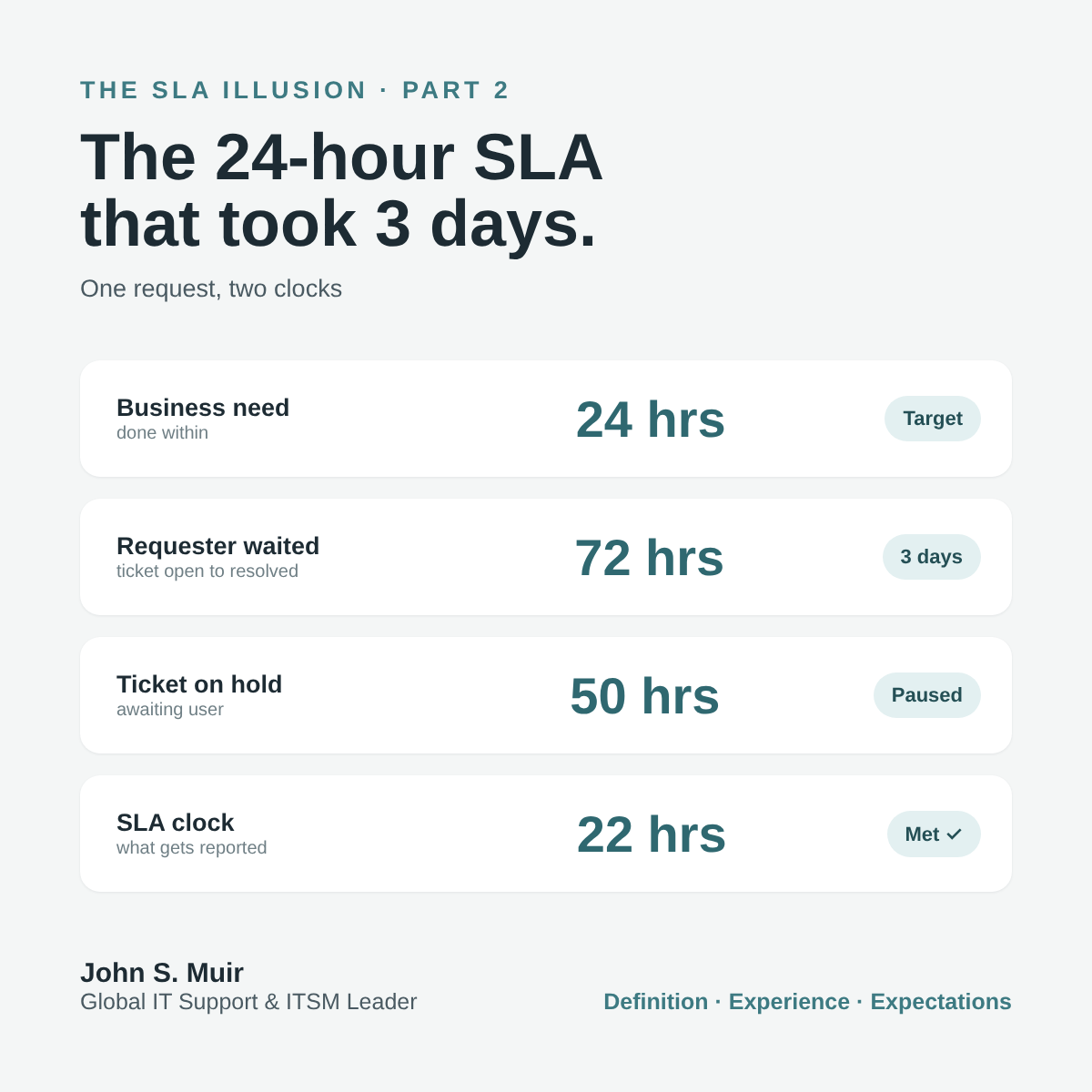
The business tells IT: this type of request has to be done within 24 hours, or we can’t operate.
IT writes a 24-hour SLA. Everyone feels good.
Here’s how it actually plays out:
Monday, 9 a.m. The ticket arrives. An agent picks it up, sees a missing detail and emails the requester. The ticket goes on hold: awaiting user.
The requester is in meetings and replies that evening. The agent reads it the next morning and asks a follow-up question. On hold again.
The emails trade back and forth. The work itself takes two hours.
Thursday, 9 a.m. Resolved.
The requester waited 72 hours. The ticket spent 50 of them on hold. The SLA clock shows 22.
SLA met. Business need missed by two days.
Nobody cheated. On-hold reasons are written into nearly every SLA, and a good support provider knows how to use them. The agreement measured the provider’s time. The business was asking about its own.
When the business says “24 hours,” it means 24 hours from the moment I asked to the moment I can work again. Not 24 hours on somebody else’s clock.
Next in the series: why missing an SLA takes real effort.
How long did your last “on hold” ticket really take, start to finish?
#ITSM #SLA #ServiceDesk #CustomerExperience #ITLeadership