Part 3 of 5 · The SLA Illusion
Missing an SLA takes real effort.
Here’s an uncomfortable truth: with the on-hold rules most SLAs include, a competent support team should almost never miss one.
The clock pauses while the team waits on the user, a vendor, an approval or a change window. All legitimate. All inside the agreement.
So when a team misses its SLAs, it usually isn’t because the work was hard. Tickets sat unassigned. Holds weren’t set. Updates weren’t logged. Priorities weren’t managed. A missed SLA means poor ticket management.
That’s what an SLA can spotlight, and it’s worth knowing. But it’s narrow. It can’t tell you whether the business got what it needed.
What to watch for in your own reporting:
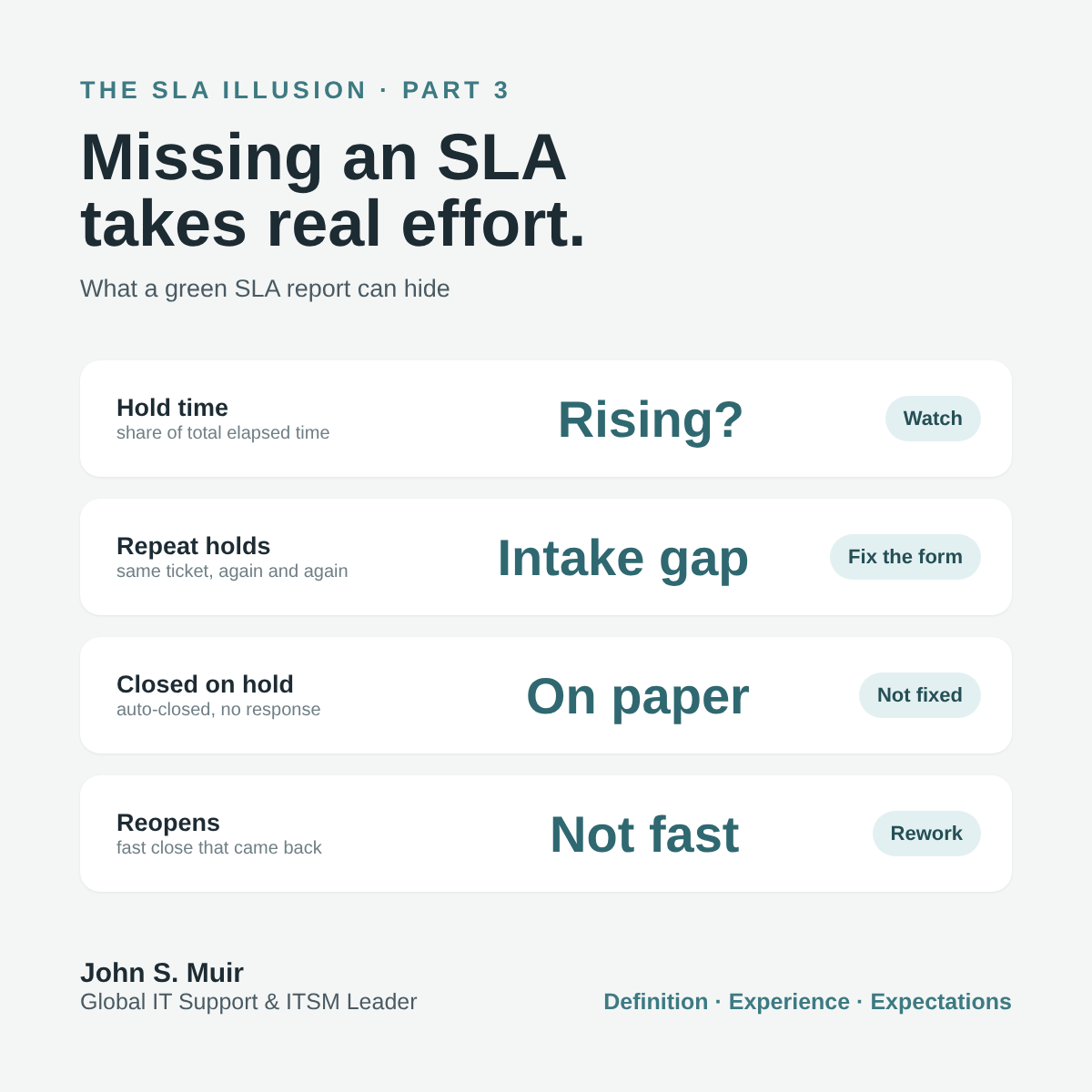
- Hold time as a share of total elapsed time. If it’s rising, the waiting is moving into the pauses.
- Repeat holds on the same ticket. Several rounds of “awaiting user” usually means the request form didn’t ask the right questions.
- Tickets closed while on hold, or auto-closed after no response. Resolved on paper, not in reality.
- Priority changes after the ticket is logged. A downgrade can quietly change the clock.
- Reopen rates. A fast close that comes back wasn’t fast.
None of these mean anyone is gaming the system. They mean the system measures the provider, not the experience.
Next in the series: asking the business the right question.
What’s the most common on-hold reason in your service desk?
#ITSM #SLA #ServiceDesk #CustomerExperience #ITLeadership