Part 4 of 5 · The SLA Illusion
Ask the business the right question.
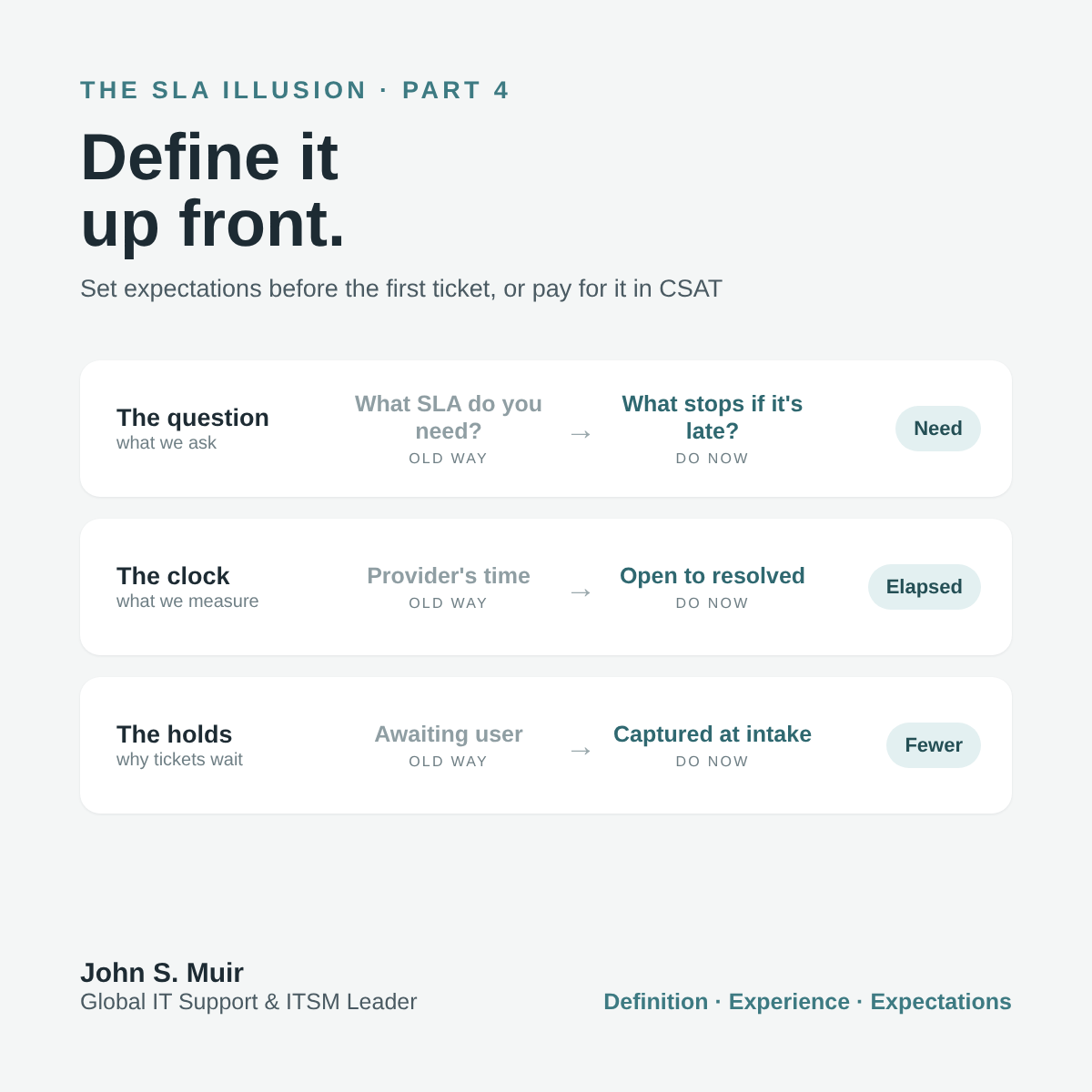
Most SLAs go wrong before the first ticket is logged.
Someone asks the business, “What SLA do you need?” The business answers with a number. IT writes the number into the agreement, with IT’s pause rules attached. The business believes it got what it asked for. It didn’t.
Put the effort in at the beginning:
- Ask what the business actually needs. “If this isn’t done within how long, what stops working?” That answer is the requirement.
- Define it as elapsed time, from ticket opened to ticket resolved. That’s what the business means, so measure that.
- Remove the reasons to put tickets on hold. Build the request form to capture what the agent needs up front. Most “awaiting user” holds are an intake problem.
- Agree who owns the wait. If approvals or a vendor sit in the path, name them and the time they get.
- Say it out loud. Tell requesters what to expect and what they need to provide.
Skip this work and you’ll find out later, in your customer satisfaction scores. That’s where a badly defined SLA shows up first.
Next in the series: leave SLAs to the lawyers.
The last time you set an SLA, who did you ask, and what exactly did you ask them?
#ITSM #SLA #ServiceDesk #CustomerExperience #ITLeadership